PEOPLE'S PERSPECTIVE
Maybe We Should Get Off Our Phones for a Minute
Singapore
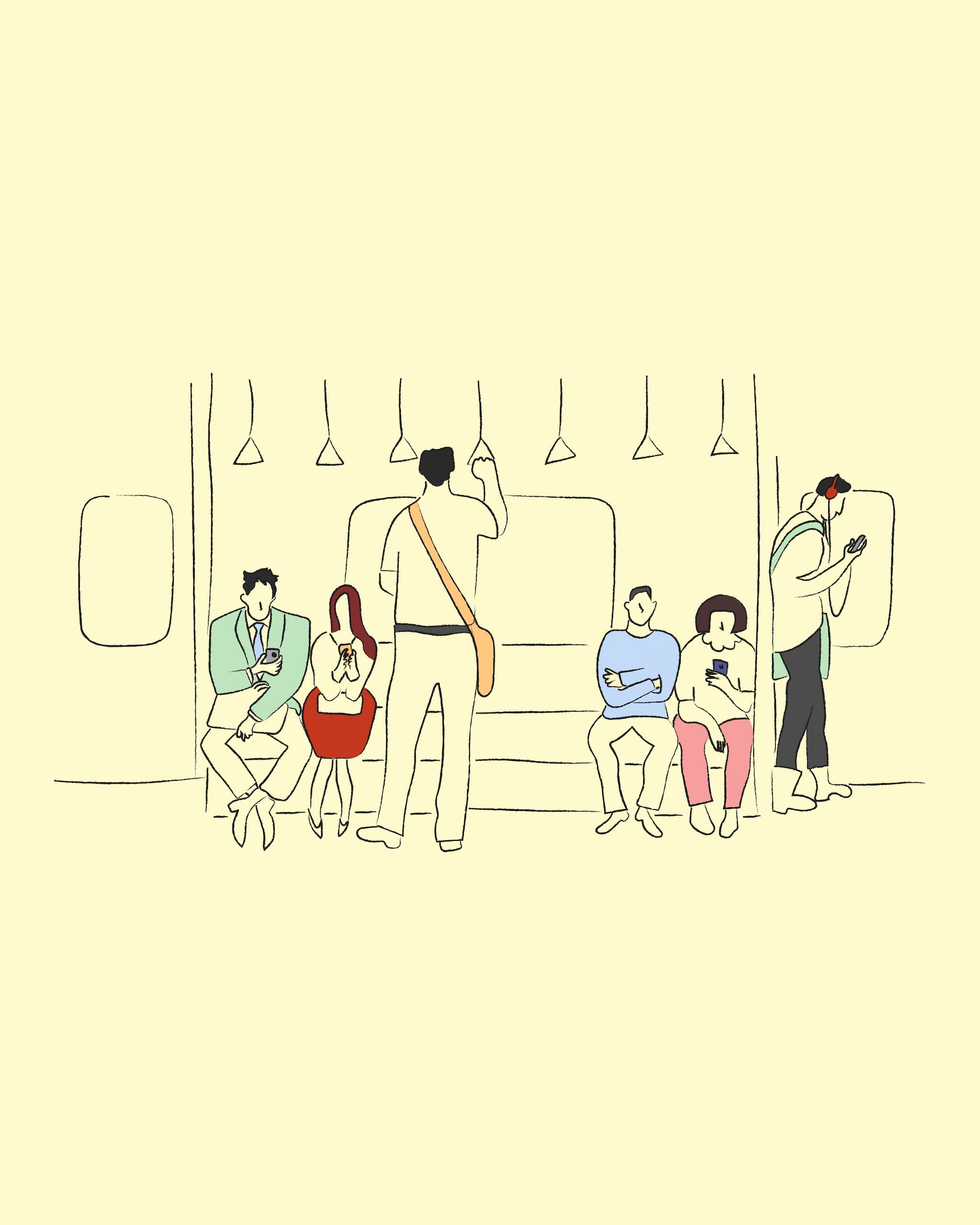
An observation of how attached we’ve become to digital screens
The journey on public transport is a liminal space and time for me. Where time doesn’t really matter, and it belongs to me solely. The environment is opposite—multitudes of commuters carrying loads, (dis)embarking at different stops, enroute to continue their story of the day. It’s overstimulating sometimes, watching this diversity move in real time.
Maybe we can afford to rest when we are not in control of how we move. But why do we all, me included, glue ourselves to our devices? Within the connection that is ourselves to the screens and the multiverse they offer, time speeds up. Digital content presents itself as a web, where the more we click and traverse—instant switching of pages, browsers, apps—the more we lose control. Stuck.
The shadows on the moving train flicker, screens colour and close.
Why are we speeding up even when we’re sitting down? Is this all a facade to get our act together, or have we conditioned ourselves to forever be on the go?
When I look up from my phone, occasionally I meet eyes with a stranger who has just done the same. A lifted barrier, an accidental interaction, air flows into my body. I can breathe again.
When and why do we put our breathing on pause?
26-year-old Natalie from Singapore loves to read, observe, stare into space, and talk to people. Recently, she noticed how we constantly use our phones during our commute, even when we could actually rest. It feels like we are voluntarily accepting that we have to always “be on the go”, physically and mentally. But do we have to?
Besides scrolling through your phone, what do you like to do during a bus commute?
Wonderwhy’s People’s Perspective is a community column where we share everyday stories from Southeast Asia—things you've noticed that others might overlook. Got a random thought, habit, or cultural quirk stuck in your notes app? Send it our way via bit.ly/WWPeoplesPerspective.